

In his lecture, Dr. Jacob Hjortsberg, social anthropologist and researcher at Copenhagen Business School, explained Singapore's rise to becoming one of the world's most successful nations despite its illiberal political model. Central to his presentation was what he called the country's "Main Paradox": how Singapore consistently delivers good governance under authoritarian rule.
Hjortsberg explained this through the concept of the "opt-in authoritarian state," driven by two core constraints: Direct political elite investment in national companies and sovereign wealth funds minimizes corrupt incentives (material constraints), as well as embracing pragmatic adaptation over utopian visions (ideological constraints).
Additionally, he highlighted "The middleman minority" concept as the main cultural factor, noting how a historically market-dominant ethnic minority became the demographic majority.
The lecture further addressed Singapore's dual social contracts. One tailored to citizens and another to foreign entities, demonstrating how the state aligns its governance with global market demands. Ultimately, Singapore's stability and success originates from its institutionalized pragmatism, placing the global economy at the very foundation of its nation-building.
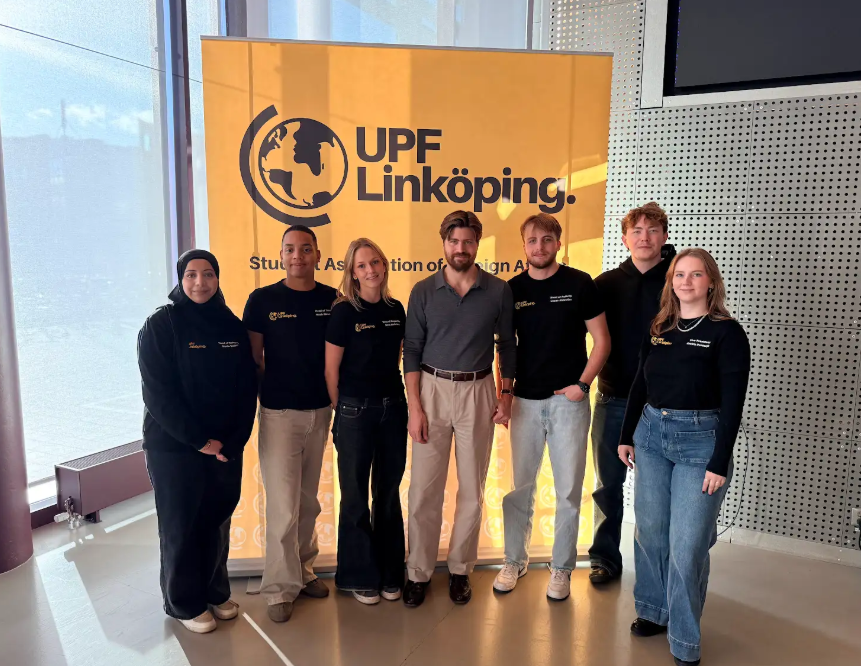
The board with Dr Jacob Hjortsberg!